Observer Effect
🧠 Psychological Thriller
2/12/202610 min read
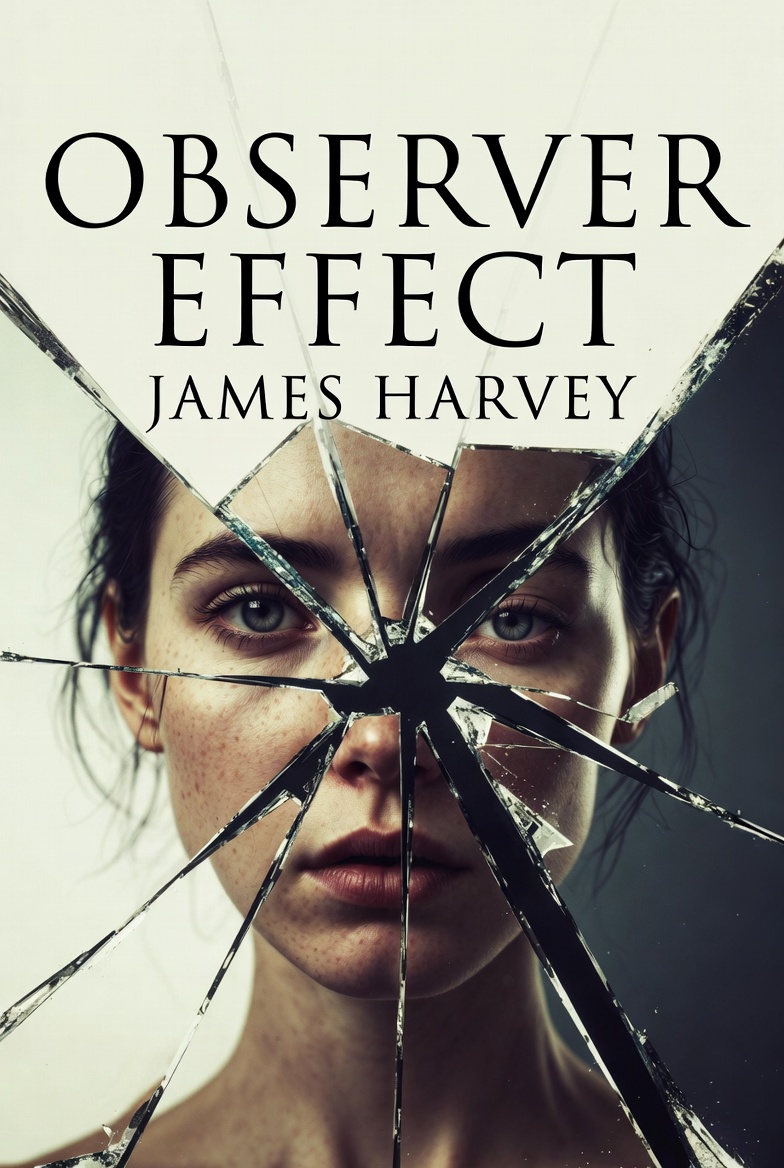
Front cover image generated by Grok using prompt created in Ideorix Publishing Section. The agent is genre aware and extracts precise details from the Story Bible in the Project to ensure the cover created is relevant to the story.
This was a 12 Chapter Novella created from this single line:
A therapist realizes her patient is manipulating her reality.
This is totally unedited - straight from Ideorix.
# Chapter 1
The recording equipment's red light flickers like a dying heartbeat, casting erratic shadows across my leather-bound appointment book. I tap the device twice—a habit born from eight years of rebuilding my practice from nothing—and watch the light stabilize. For now.
Two o'clock. Theo Grimshaw. New patient.
I adjust the microphone's angle and test the levels one final time. The digital display shows green bars climbing steadily as I speak: "Session recording test, November fifteenth, two thousand twenty-three, Dr. Beatrice Holloway." My voice sounds steady, professional. The way it should.
The way it hasn't felt in weeks.
I smooth my navy blazer and glance at the intake form spread across my desk. Theo Grimshaw, twenty-nine, referred by... the referral source line is blank. Self-referred, then. They often are, the difficult ones. The ones who find me specifically because of my reputation with cases others won't take.
The grandfather clock in the corner begins its sonorous chime, and precisely on the second stroke, a knock echoes through my second-floor office. Punctual. I appreciate that in a patient.
"Come in."
The door opens to reveal a man who doesn't quite match the mental image I'd formed from his sparse paperwork. Theo Grimshaw is tall, perhaps six-two, with the kind of lean build that suggests careful attention rather than natural metabolism. His dark hair is perfectly styled, not a strand out of place, and his charcoal suit is expensive—Italian, if I'm not mistaken. But it's his eyes that catch me off guard. Pale gray, almost colorless, and so intensely focused that I feel momentarily like a specimen under glass.
"Dr. Holloway." His smile is warm, practiced. "Thank you for fitting me into your schedule on such short notice."
"Please, have a seat wherever you're comfortable."
He surveys the room with those unsettling eyes, taking in details: the antique mirror that reflects both our positions, the tall windows with their view of the elm trees now bare in late autumn, the Persian rug that cost more than I should have spent during my first year back in practice. His gaze lingers on the recording equipment.
"Is that necessary?" He gestures toward the microphone.
"I'm afraid so. It's legally required for all therapeutic sessions." I settle into my chair, notepad ready. "The recordings are confidential, of course, and stored according to HIPAA regulations."
"Of course." He chooses the leather armchair—they always do—and crosses his legs with elegant precision. "I appreciate thoroughness in professional matters."
Something in his tone makes me glance at the recording light. Still red, still steady. Good.
"Shall we begin with what brought you to seek therapy?"
Theo tilts his head slightly, studying me. "I'd say that depends on your definition of seeking. Isn't it more accurate to say that sometimes we're drawn to exactly what we need, even when we don't realize we need it?"
I make a note: *Intellectualizes, deflects direct questions.* Standard defensive behavior, though his phrasing is more sophisticated than most. "That's an interesting perspective. What drew you to my practice specifically?"
"Your reputation."
"Which aspect of my reputation?"
"Your work with difficult cases. Patients other therapists couldn't help." He pauses, and those pale eyes seem to see straight through me. "Patients who challenge conventional therapeutic approaches."
My pen stops moving. I haven't advertised that specialization. In fact, I've been deliberately discrete about the more challenging cases I've taken on since rebuilding my practice. "Where did you hear about that aspect of my work?"
"Word travels in certain circles, Dr. Holloway. People talk about the therapist who doesn't give up on the hopeless cases."
The recording light flickers.
I glance at it, frowning. The equipment is less than a year old, serviced monthly. It shouldn't be malfunctioning. "Excuse me one moment." I lean forward to check the connections, but everything appears secure. The light steadies again.
"Technical difficulties?" Theo's voice carries a note of concern that feels genuine.
"Just a minor glitch. Where were we?"
"You were asking about why I chose your practice."
Had I? I consult my notes, but I've only written that single observation about intellectualizing. No record of his response about my reputation with difficult cases. Strange—I'm meticulous about documentation.
"Tell me about what's been troubling you lately," I redirect, falling back on standard intake protocol.
"Troubling is such a loaded word, don't you think? It implies that difficulty is inherently problematic, rather than potentially transformative." He shifts in the chair, and sunlight from the tall windows catches the silver watch on his wrist. "I prefer to think of life's challenges as opportunities for deeper understanding."
"Understanding of what?"
"Patterns. The way people reveal themselves when they think they're hidden. The gap between who we present ourselves to be and who we actually are." His smile never wavers, but something in his expression sharpens. "For instance, you've been taking notes, but you haven't written anything for the past several minutes. Yet your pen keeps moving. Habit? Nervous energy? Or are you documenting something other than my words?"
I look down at my notepad. He's right—my pen has been moving, creating small spirals and cross-hatched lines in the margins. Doodles I don't remember making. "Sometimes the mind processes information in different ways during a session. It's perfectly normal."
"Normal for you? Or normal in general?"
The question hangs in the air like smoke. I set down my pen deliberately. "Let's focus on you, Theo. What would you like to accomplish in our work together?"
"I'd like to understand what makes someone choose to dedicate their life to healing broken minds." His head tilts again, and I have the unsettling sensation that he's the one conducting the interview. "Especially someone who's experienced their own professional... setbacks."
My mouth goes dry. "I'm not sure what you mean."
"Of course you do." His voice is gentle, almost compassionate. "The suspension of your medical license eight years ago. The patient who—"
"That information isn't public record." The words come out sharper than I intended. Professional, controlled Dr. Holloway doesn't snap at patients. But something about his casual mention of the darkest period of my career feels like a violation.
"Isn't it? I suppose that depends on where one knows to look."
The recording light flickers again, longer this time. In the intermittent red glow, Theo's pale eyes seem almost luminescent. I reach for the equipment, but before I can check it again, the light stabilizes.
"Perhaps we should reschedule," I hear myself saying. "The technical issues—"
"Are hardly insurmountable." Theo leans forward slightly, and I catch a hint of expensive cologne mixed with something else. Something clinical. "Besides, some of the most important conversations happen off the record, don't you think?"
"All therapeutic conversations are on the record. It's not optional."
"But memory is selective, isn't it? We remember what serves our narrative, forget what threatens our self-concept. Take your patient from eight years ago—Emily Chen. I imagine you remember the last session quite differently now than you did then."
Emily. I haven't heard that name spoken aloud in years. Haven't allowed myself to think it except in the darkest hours before dawn when sleep eludes me and guilt serves as my only companion.
"How do you know that name?"
"The same way I know about your impressive work with trauma cases since your return to practice. The same way I know you still see her face sometimes when you look in that mirror." He nods toward the antique glass that's been reflecting our conversation. "The same way I know you chose this office specifically because the natural light reminded you of the hospital where you first realized you wanted to save people."
I stand abruptly, my chair rolling backward. "This session is over."
"Is it?" Theo remains seated, perfectly calm. "We've only been talking for fifteen minutes. Hardly enough time to establish proper therapeutic rapport."
Fifteen minutes. I glance at the clock, but the numbers seem to swim slightly. How long have we been talking? It feels like hours, yet also like no time at all. The afternoon light streaming through the windows hasn't shifted, the shadows remain constant.
"I need to check my equipment," I manage, reaching for the recording device.
"Of course." Theo stands gracefully, straightening his jacket. "I understand the need to ensure proper documentation."
I punch the stop button and immediately hit rewind, listening to the playback through my earpiece. Static. Intermittent words. Nothing coherent enough to constitute a proper session record. Eight years of meticulous practice, and my equipment fails during the intake with the one patient who seems to know everything about my professional history.
"The recording is damaged," I say, more to myself than to him.
"Technology can be unreliable. But that's why we have other ways of preserving important moments." Theo moves toward the door, then pauses. "I assume you'll want me to complete a more traditional intake form for our next session?"
"Next session?"
"Tuesday at two? I believe that's when you typically schedule follow-ups for new patients." He reaches into his jacket and pulls out a small leather appointment book—expensive, like everything else about him. "Yes, Tuesday works perfectly for me."
I haven't scheduled a follow-up. Haven't even processed this intake properly. But I find myself nodding. "Tuesday at two."
"Excellent." He opens the door, then turns back. "Oh, I nearly forgot." From his other pocket, he produces a small object and places it on the side table near the door. "I found this in the parking lot. I thought it might belong to someone in the building."
It's an antique brass compass, tarnished with age but still beautiful. The kind of thing a collector might carry, or someone who appreciates objects with history. I've never seen it before.
"It's not mine."
"Are you certain? It seems like the sort of thing that would appeal to someone with your appreciation for... heritage pieces." His gaze moves meaningfully around my office, taking in the antique mirror, the grandfather clock, the Persian rug.
"I'm certain."
"Well then, I'll leave it here in case the owner comes looking." He smiles that practiced smile again. "Until Tuesday, Dr. Holloway."
The door closes with a soft click, and I'm alone with the broken recording, the mysterious compass, and the growing certainty that I've just encountered something far outside my professional experience.
I sink back into my chair and stare at my notepad. Below my initial observation about intellectualizing behavior, I've filled three-quarters of a page with detailed notes in my own handwriting. Observations about Theo's body language, his speech patterns, his potential diagnostic indicators. Notes that reference things he said that I clearly remember him saying—about patterns, about the gap between presented self and true self, about his interest in understanding what drives people to heal broken minds.
Notes about a conversation that apparently wasn't recorded.
I read through them twice, trying to reconcile what I've written with the static-filled playback. Either my equipment failed catastrophically, or I wrote extensive notes about a conversation I imagined.
Neither possibility is acceptable.
I flip to a fresh page and begin writing a summary of the session, trying to capture the pertinent details while they're still fresh. Theo Grimshaw, twenty-nine, well-dressed and articulate. Demonstrates intellectualization as a defense mechanism. Deflects personal questions. Shows unusual knowledge of my professional background—research? Google searches can reveal surprising amounts of information these days.
But Emily's name isn't in any online records. I made certain of that years ago.
I set down my pen and walk to the window, looking out at the empty parking lot. Theo's car is gone—I assume he drove, though I can't recall seeing him arrive. The late afternoon light slants through the bare elm branches, creating patterns of shadow and brightness across the asphalt.
Behind me, something small and metallic catches the light.
The compass sits on the side table where Theo left it, its brass surface glowing warm gold in the afternoon sun. I pick it up, surprised by its weight. The face is cracked but readable, the needle pointing steadily north despite being inside a building with metal fixtures that should disrupt its accuracy.
Along the edge, in tiny engraved letters, I can just make out a partial inscription: "For B.H.—Trust your direction."
My initials. Beatrice Holloway.
I set the compass down quickly, as if it's hot. Coincidence. B.H. could be anyone. The engraving is old, worn nearly smooth. It probably belonged to a Barbara Harrison or a Benjamin Hughes decades ago and has nothing whatsoever to do with me.
But as I stare at it, sitting innocuously on my side table like it belongs there, I can't shake the feeling that it's been waiting for me.
The phone on my desk rings, jolting me from my reverie. I check the caller ID and frown. The number is listed as "THEO GRIMSHAW," but I never entered his contact information into my system. He gave me only his name and age on the intake form, no phone number.
I let it go to voicemail.
Two minutes later, I play the message: "Dr. Holloway, this is Theo. I wanted to thank you for such an insightful first session. I found our conversation about perception and memory particularly illuminating. I've been thinking about what you said regarding the subjective nature of truth, and I believe our work together is going to be more transformative than either of us initially expected. I'll see you Tuesday at two."
I listen to the message three times. I said nothing about perception, memory, or subjective truth. Our conversation—what I remember of it—focused primarily on his deflection of my intake questions and his inappropriate knowledge of my background.
Unless the conversation I remember isn't the conversation we had.
I return to my notepad, reading through my handwritten observations again. "Patient demonstrates sophisticated understanding of psychological defense mechanisms." "Expressed interest in the therapeutic relationship as a microcosm of power dynamics." "Noted that healing requires confronting uncomfortable truths about ourselves."
When did he say these things? When did I write them down?
The compass glints in the fading light, its needle steady and sure, pointing toward something I can't see but somehow know is there—just beyond the edge of my understanding, waiting to reveal itself when I'm ready to acknowledge what I already suspect.
That nothing about Theo Grimshaw is what it seems.
That my equipment didn't malfunction by accident.
That the gaps in the recording match the gaps in my memory with disturbing precision.
And that on Tuesday at two o'clock, when he returns to my office with that practiced smile and those pale, knowing eyes, I'll discover whether I'm the doctor in this relationship—or the patient.
Contact
Reach out anytime, using the contact form
CONTACT IDEORIX USING THIS FORM:
© 2025 James Harvey Media. All rights reserved.